March 30th, 10am PDT
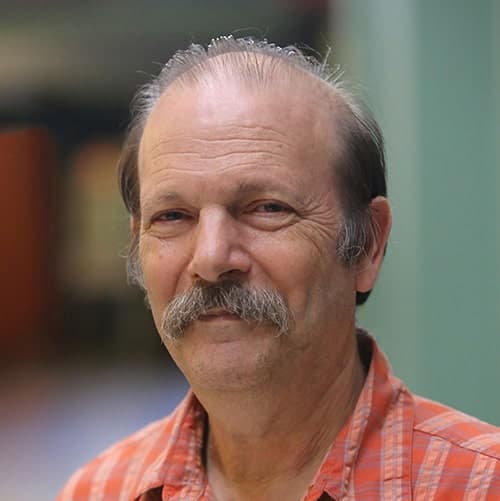
Dr. Pat Hanrahan is a pioneering computer scientist and founding employee of Pixar Animation Studios, where he developed key rendering technologies including RenderMan. He received the 2019 A.M. Turing Award alongside Ed Catmull for their fundamental contributions to 3-D computer graphics, including the concept of computer-generated imagery in filmmaking. A professor at Stanford University, Hanrahan has also co-founded Tableau Software and made groundbreaking contributions to GPU computing and visualization.
Question of the Day
“With AI tools like Claude generating code, does learning to program still matter -- and if so, what should CS students actually focus on?”
Insight: Hanrahan's answer: spec, read, verify. Treat the prompt as a specification (forces you to think clearly about what you want), read the generated code carefully (reading code is more important than writing it), and test rigorously. AI eliminates the boring parts and lets you think at a higher level -- but you still need the fundamentals to know good code from bad.
Talk Highlights: Question & Answer
In this wide-ranging Q&A session, Pat Hanrahan discussed his journey from physics and neurobiology at UW-Madison through Pixar and RenderMan to founding Tableau, and shared his perspective on the intersection of AI and computer graphics. He described how neural networks can provide heuristics for traditionally hard rendering problems like path sampling, outlined his philosophy on programming with AI tools -- spec, read, verify -- and discussed the convergence of physical and semantic world models. He also reflected on the importance of combining computing with domain expertise and being driven by problems you are passionate about solving.
Key Takeaways
- Hanrahan advocates a 'spec, read, verify' approach to programming with AI: treat the prompt as a specification, read the generated code carefully, and test it rigorously. He argues reading code is more important than writing it.
- Neural nets can provide heuristics for traditionally unsolvable rendering problems like optimal path sampling, similar to how they propose moves in chess or steps in mathematical proofs. The fundamentals of physics-based rendering remain, but AI fills in where analytical solutions do not exist.
- Traditional computer graphics has physical world knowledge (materials, shapes, light), while LLMs have semantic world knowledge (culture, emotions, context). The convergence of these through multimodal embeddings is one of the most promising directions in the field.
- Hanrahan started his career programming neural nets on image processing hardware around 1982, during what he calls the 'dark ages' of neural nets. His background in physics, neurobiology, and parallel computing directly enabled his later breakthroughs in computer graphics.
Notable Quotes
“I didn't actually think it was possible, to be honest, but I thought it would be really interesting to try.”
“If you train yourself in really fundamental skills and concepts and then you get exposed to really interesting problems, you almost can't help but come up with great stuff.”
“Reading code is more important than writing code in my experience.”
“You shouldn't ask me about the future. You should be thinking about the future because you're gonna make the future, not me.”
Biography +
Pat Hanrahan
Early Life and Education
Pat Hanrahan is a distinguished computer scientist who has made transformative contributions to computer graphics, rendering, and visualization.
Education
University of Wisconsin-Madison
- Earned his Bachelor of Science in Nuclear Engineering
- Obtained his Ph.D. in Biophysics in 1985
Career
Pixar Animation Studios
Hanrahan was one of the founding employees at Pixar, where he was a key architect of the RenderMan rendering system. RenderMan became the industry standard for photorealistic rendering and was used in nearly every major animated film and visual effects production for decades. His work at Pixar earned an Academy Award for Technical Achievement.
Stanford University (1995-present)
Hanrahan joined Stanford University as a professor of computer science and electrical engineering. At Stanford, he has led research in rendering, graphics hardware, and visualization systems.
Tableau Software
Hanrahan co-founded Tableau Software, a data visualization company that revolutionized how people interact with and understand data. Tableau went public in 2013 and was acquired by Salesforce in 2019.
Major Contributions
RenderMan
As a founding employee at Pixar, Hanrahan was instrumental in developing the RenderMan rendering system, which established the standard for photorealistic image synthesis in the film industry.
Computer Graphics Research
His academic research has spanned volume rendering, subsurface scattering, global illumination, and GPU computing. His work on the Brook stream programming language helped establish the foundations for general-purpose GPU computing.
Data Visualization
Through Tableau and his academic work, Hanrahan has advanced the field of interactive data visualization, making data analysis accessible to a broader audience.
Legacy
Pat Hanrahan's contributions bridge the gap between academic research and industry impact. From pioneering rendering technology at Pixar to co-founding Tableau to his influential research at Stanford, his work has shaped how we create and interact with visual information. The 2019 Turing Award, shared with Ed Catmull, recognized the profound impact of their work on computer graphics and the film industry.
Career Timeline +
Career Timeline
- 1985: Received Ph.D. in Biophysics from the University of Wisconsin-Madison
- 1986: Joined Pixar Animation Studios as a founding employee
- 1986-1995: Developed RenderMan rendering system at Pixar
- 1993: Received Academy Award for Technical Achievement for RenderMan
- 1995: Joined Stanford University as Professor of Computer Science and Electrical Engineering
- 2003: Co-founded Tableau Software
- 2013: Tableau Software IPO
- 2019: Awarded the ACM Turing Award (with Ed Catmull) for fundamental contributions to 3-D computer graphics
- 2019: Tableau acquired by Salesforce
- Present: Canon Professor of Computer Science and Electrical Engineering at Stanford University
Awards and Honors
- ACM Turing Award (2019): Awarded jointly with Ed Catmull for fundamental contributions to 3-D computer graphics
- Academy Award for Technical Achievement (1993): For RenderMan
- SIGGRAPH Steven Anson Coons Award (2003): For outstanding creative contributions to computer graphics
- Fellow of the ACM
- Member of the National Academy of Engineering
- Member of the American Academy of Arts and Sciences
Content produced by Turing Minds. Usage guidelines.