October 18th, 1pm EST
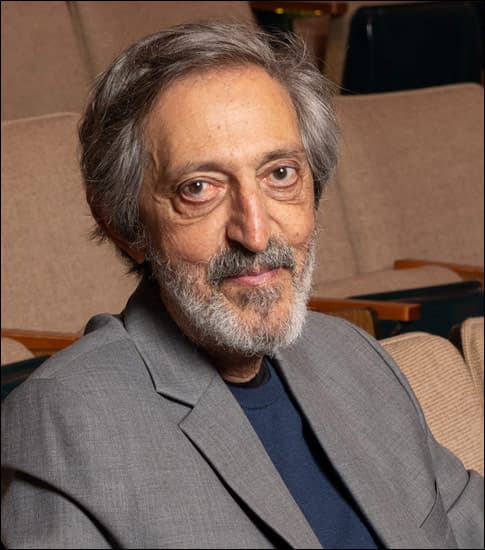
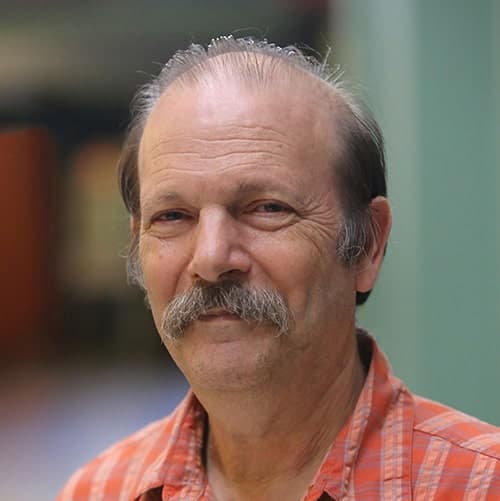
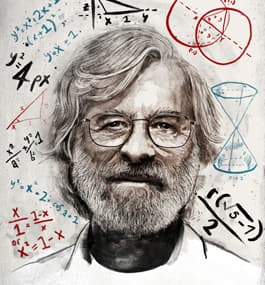
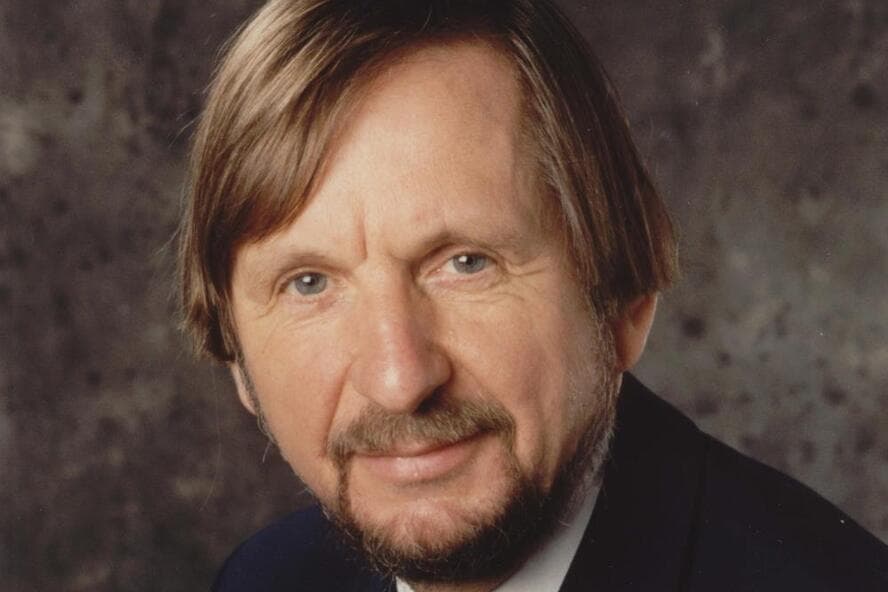
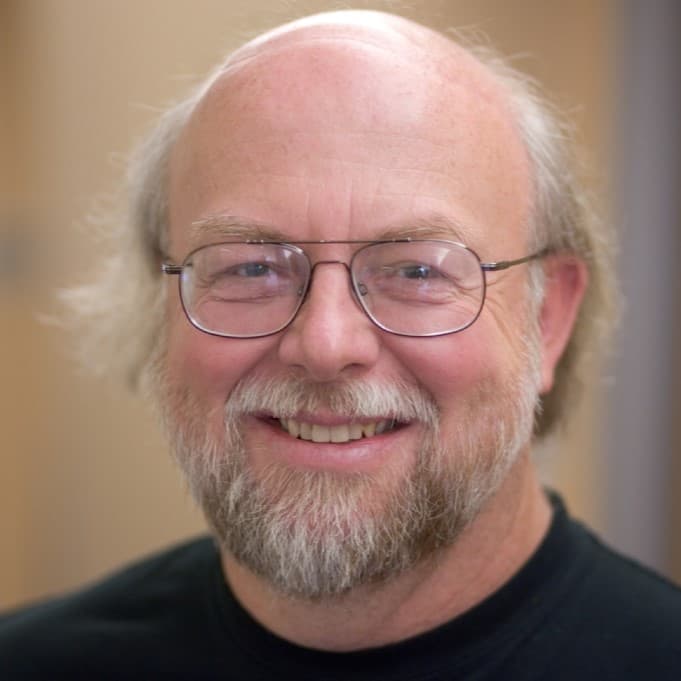
Dr. James Gosling, often referred to as the 'father of Java', is a renowned computer scientist whose creation of the Java programming language has revolutionized software development. His work has enabled the 'write once, run anywhere' paradigm, fundamentally changing how applications are developed and deployed across various platforms. Dr. Gosling's contributions have had a profound impact on the tech industry, influencing everything from web applications to mobile devices, and continue to shape the landscape of modern computing.
Question of the Day
“If generative AI can write code but struggles with novel problems, what skills should the next generation of programmers prioritize?”
Insight: Gosling argues that the hard work of software has always been the problems you cannot find in a library. Critical thinking, system design, and the ability to reason about novel constraints remain irreplaceable -- the skills AI is worst at are exactly the ones that matter most.
Talk Highlights: On Retirement Projects, the Limits of Generative AI, and the Social Engineering Behind Java
In this Q&A session, Dr. Gosling fielded questions spanning generative AI's capabilities in programming, his retirement activities, Java's design philosophy, and venture capital culture. He argued forcefully that generative AI remains at the 'party trick stage' for code generation, excelling only at tasks already solved by standard libraries while failing at novel or complex problems. He reflected on Java's creation as fundamentally a social engineering challenge rather than a technical one, and shared candid views on the venture capital industry.
Key Takeaways
- Gosling says generative AI for programming is 'not past the party trick stage' -- it works well for tasks already represented in training data, but those are exactly the tasks that already exist as polished library functions.
- Java's design as a 'seductive version of C' was an intentional social engineering trick to lure C/C++ developers into thinking they understood the language, even though under the hood it had radically different technology like real garbage collection and real multi-threading.
- He describes himself as literally in the '10th percentile of reading ability' but says his comprehension changes dramatically when motivated, which is why he learns best by building things.
- Gosling is deeply cynical about venture capital, saying VCs 'wouldn't know a good idea if it slapped them in the face' and that the industry fundamentally operates on the 'greater fool theory.'
Notable Quotes
“The stuff that generative AI is good at, mostly people don't do, because there are standard libraries for that. If you've got something you can't find in a library -- which is the actual hard work of software -- generative AI isn't going to help you.”
“I'd feel a whole lot better about the AI world if people would stop using the term AI and just start saying 'advanced statistical techniques' -- and just be unabashed about the fact that we're using gobs of horsepower to analyze gobs of data to tease out patterns.”
Biography +
James Gosling
Early Life and Education
James Arthur Gosling, born on May 19, 1955, in Calgary, Alberta, Canada, is a renowned Canadian computer scientist widely recognized for his pivotal role in the creation and development of the Java programming language. Gosling attended William Aberhart High School in Calgary, where he began showcasing his technical prowess by writing software to analyze data from the ISIS 2 satellite for the University of Calgary's physics department.
Gosling pursued higher education at the University of Calgary, earning a Bachelor of Science degree in 1977. Following this, he attended Carnegie Mellon University, where he obtained his MA and PhD in computer science in 1983. During his time at Carnegie Mellon, he developed significant projects such as Gosling Emacs, a version of Emacs, and a multi-processor version of Unix for a 16-way computer system.
Career and Contributions
Sun Microsystems
James Gosling's professional journey is most notably marked by his tenure at Sun Microsystems, where he worked from 1984 to 2010. At Sun, he invented NeWS, an early Unix windowing system, although it did not gain widespread adoption due to its licensing model. However, Gosling's most significant contribution came in the form of the Java programming language, which he conceived and developed in 1994.
Gosling's inspiration for Java stemmed from his experience in writing a program to port software from a PERQ by translating Perq Q-Code to VAX assembler and emulating the hardware. His work on Java included designing the original compiler and virtual machine, which played a crucial role in making Java an architecture-neutral and widely distributed programming language. source.
Post-Sun Career
After leaving Sun Microsystems following its acquisition by Oracle Corporation in 2010, Gosling had a brief stint at Google in 2011. He then joined Liquid Robotics, a startup focused on ocean data services, where he worked until its acquisition by Boeing in 2016. Following this, Gosling took up a role at Amazon Web Services as a Distinguished Engineer in May 2017. He retired in July 2024.
Gosling also serves as an advisor at the Scala company Lightbend, an Independent Director at Jelastic, a Strategic Advisor for Eucalyptus, and a board member of DIRTT Environmental Solutions.
Awards and Honors
James Gosling's contributions to computer science have been recognized with numerous prestigious awards and honors:
- 2002: Awarded The Economist Innovation Award.
- 2002: Received the USENIX Lifetime Achievement Award, known as The Flame Award.
- 2004: Elected as a Foreign Member of the National Academy of Engineering for his work on Java.
- 2007: Made an Officer of the Order of Canada, the second-highest civilian honor in Canada.
- 2013: Became a Fellow of the Association for Computing Machinery.
- 2015: Awarded the IEEE John von Neumann Medal.
- 2019: Named a Computer History Museum Fellow for his work on Java.
Publications
James Gosling has co-authored several influential books on Java programming:
- Ken Arnold, James Gosling, David Holmes, The Java Programming Language, Fourth Edition, Addison-Wesley Professional, 2005, ISBN 0-321-34980-6.
- James Gosling, Bill Joy, Guy L. Steele Jr., Gilad Bracha, The Java Language Specification.
Personal Life
Gosling has two children, Katie and Kelsey, who are half-siblings from his two marriages. Despite his professional achievements, he has maintained a low profile regarding his personal life.
Legacy
James Gosling's legacy in the world of computer science is indelibly linked to his creation of the Java programming language, which continues to be a cornerstone of modern software development. His vision for an architecture-neutral programming language has enabled countless applications and systems, solidifying his place as a pioneer and innovator in the field.
Career Timeline +
Career Timeline
- 1977: Earned Bachelor of Science degree from the University of Calgary
- 1983: Obtained MA and PhD in computer science from Carnegie Mellon University
- 1984: Joined Sun Microsystems
- 1994: Conceived and developed the Java programming language source
- 2002: Awarded The Economist Innovation Award and USENIX Lifetime Achievement Award
- 2004: Elected as a Foreign Member of the National Academy of Engineering
- 2007: Made an Officer of the Order of Canada
- 2010: Left Sun Microsystems after its acquisition by Oracle Corporation
- 2011: Brief stint at Google
- 2011-2016: Worked at Liquid Robotics
- 2013: Became a Fellow of the Association for Computing Machinery
- 2015: Awarded the IEEE John von Neumann Medal
- 2017: Joined Amazon Web Services as a Distinguished Engineer
- 2019: Named a Computer History Museum Fellow
- 2024: Retired from Amazon Web Services
Content produced by Turing Minds. Usage guidelines.