February 7th, 1pm EST
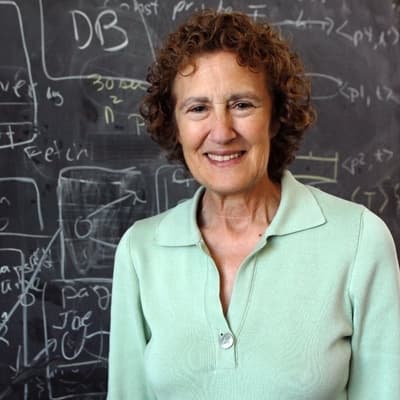
Dr. Barbara Liskov is an Institute Professor at MIT, known for her work in programming languages and systems, including data abstraction, polymorphism, and distributed computing.
Question of the Day
“Liskov says you cannot design a program with just 'black boxes' -- you need abstractions. What makes a good abstraction?”
Insight: Liskov's key insight is that abstractions must map to concepts programmers already understand. Data types provided that bridge: they connected modularity to design because developers already thought in terms of types. A good abstraction hides complexity while preserving the mental model needed to reason about behavior.
Talk Highlights: How Data Abstraction Changed Computing Forever
Dr. Liskov traces the origins of data abstraction from her accidental entry into computer science through her PhD at Stanford under John McCarthy, to her pivotal realization at MIT that partitions could be conceptualized as data types -- linking modularity to program design. She describes designing CLU, which introduced clusters, iterators, exception handling, and parametric polymorphism, and recounts how her specification-oriented thinking led to the Liskov Substitution Principle.
Key Takeaways
- The key intellectual breakthrough was recognizing that partitions could be understood as data types -- this single conceptual link connected modularity to design, because programmers already understood data types from existing languages.
- Liskov deliberately chose a heap-based object model for CLU, going against the prevailing view that pointers were 'evil' -- essential for true independent compilation of modules.
- The Liskov Substitution Principle arose from Liskov's discovery that the OOP community was confusing implementation inheritance with type hierarchy -- stacks aren't subtypes of queues because they behave differently.
Notable Quotes
“I realized that I could think about partitions as data types. It links modularity to design. You can't design a program by saying I just want a bunch of black boxes, but you can design a program if you think about abstractions.”
“When I got the Turing Award I realized the world had changed while I was not paying attention. My graduate students didn't know there was a time before data abstraction.”
Biography +
Barbara Liskov
Early Life and Education
Barbara Jane Huberman was born on November 7, 1939, in Los Angeles, California. She earned her B.A. in Mathematics from UC Berkeley in 1961, then completed her Ph.D. in Computer Science at Stanford University in 1968 under John McCarthy, making her one of the first women in the United States to earn a Ph.D. in computer science. Her dissertation involved a chess endgame program and the killer heuristic algorithm.
Career and Contributions
CLU and Data Abstraction
After working at MITRE Corporation, Liskov joined MIT where she led the design of CLU, a pioneering programming language that introduced abstract data types, clusters, iterators, and exception handling. CLU's innovations profoundly influenced Java, C++, C#, Python, and Ada.
Distributed Systems and the Liskov Substitution Principle
In the 1980s, Liskov led development of Argus, the first high-level language for distributed programming. She later developed Practical Byzantine Fault Tolerance (PBFT) with Miguel Castro in 1999. In 1994, she co-authored with Jeannette Wing the paper formalizing the Liskov substitution principle, a fundamental rule of object-oriented design.
Awards and Honors
- 2004: IEEE John von Neumann Medal
- 2008: ACM A.M. Turing Award for practical and theoretical advances to programming language and distributed systems design
- 2012: Inducted into the National Inventors Hall of Fame
- 2018: IEEE Computer Pioneer Award
- 2023: Benjamin Franklin Medal
- Present: Institute Professor and Ford Professor of Engineering at MIT
Career Timeline +
Career Timeline
- 1939: Born in Los Angeles, California
- 1961: Earned B.A. in Mathematics from UC Berkeley
- 1968: Earned Ph.D. in Computer Science from Stanford under John McCarthy
- Late 1960s: Worked at MITRE Corporation
- Early 1970s: Joined MIT faculty
- 1970s: Designed and implemented CLU
- 1980s: Led development of Argus distributed programming language
- 1994: Co-authored the Liskov substitution principle paper
- 1999: Developed PBFT with Miguel Castro
- 2004: IEEE John von Neumann Medal
- 2008: Awarded the ACM A.M. Turing Award
- 2012: Inducted into the National Inventors Hall of Fame
- 2018: IEEE Computer Pioneer Award
- Present: Institute Professor and Ford Professor of Engineering at MIT
Content produced by Turing Minds. Usage guidelines.