March 13th, 12pm EST
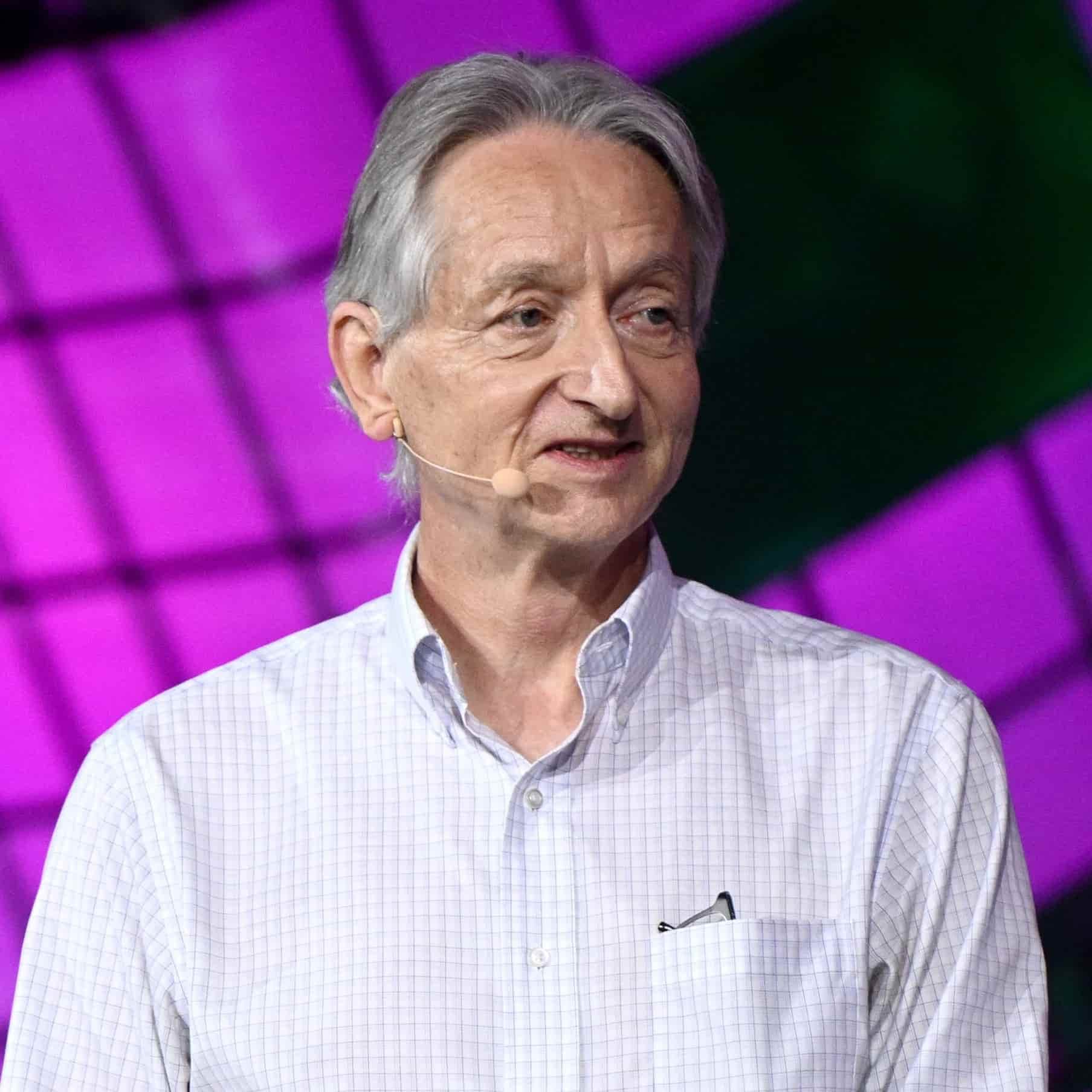
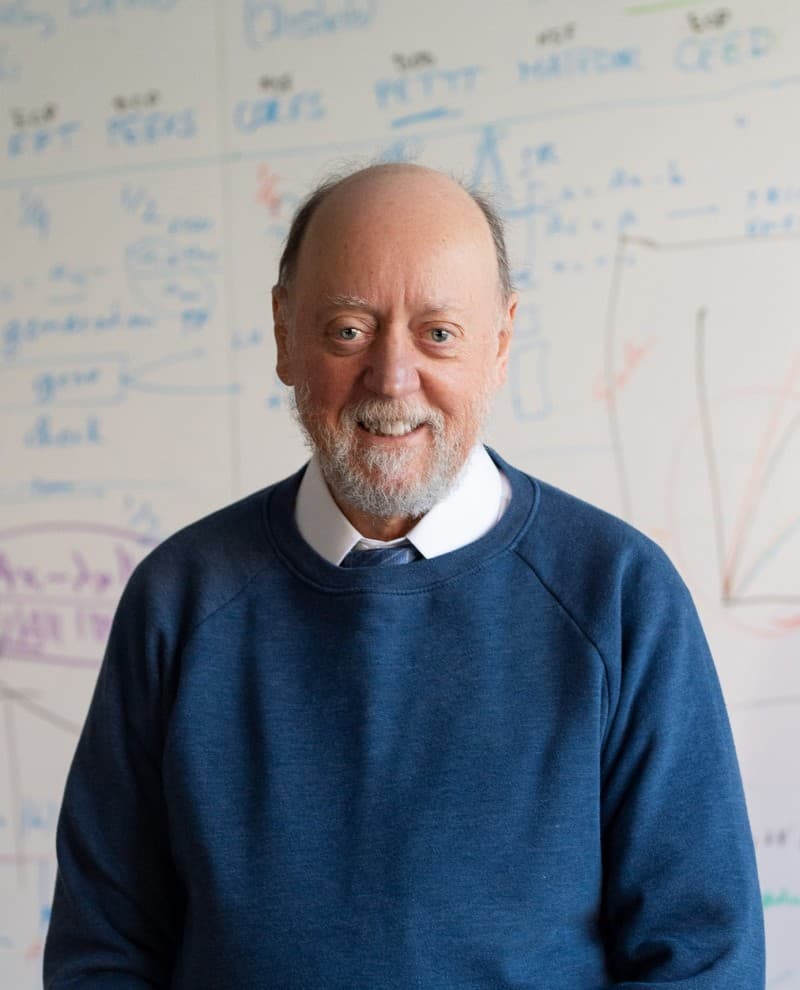
Dr. Jack Dongarra is a Distinguished Professor at the University of Tennessee, known for his expertise in numerical algorithms, parallel computing, and advanced-computer architectures.
Question of the Day
“If the world's fastest supercomputer achieves less than 1% of its theoretical peak on real workloads, is raw hardware power the wrong metric?”
Insight: Dongarra highlights that algorithms and software always lag behind hardware. The real bottleneck is not building faster chips but writing software that can exploit them. Measuring success by application performance rather than theoretical peak would redirect investment toward the software gap.
Talk Highlights: A Not so Simple Matter of Software
Dr. Dongarra surveys high performance computing, tracing the evolution from vector processors to exascale systems. He explains how the end of Dennard scaling forced a shift from clock frequency gains to multicore parallelism, details the DOE's $4 billion Exascale Computing Project and the Frontier supercomputer, and highlights that real applications achieve only 0.8-3% of theoretical peak performance -- revealing an enormous gap between hardware capability and software utilization.
Key Takeaways
- Dennard scaling ended around 2004-2006 -- doubling frequency would increase power by 8x (100W to 800W per chip), making cooling infeasible. This forced the shift to multicore parallelism.
- The DOE's Exascale Computing Project cost $4 billion over seven years with no follow-on at scale, leaving 800 researchers scrambling -- many will move to hyperscaler companies, a brain drain from government HPC.
- Frontier achieves only 0.8% of its theoretical peak on the sparse matrix benchmark representing real workloads -- analogous to a 200 mph race car traveling at 2 mph.
Notable Quotes
“If each person on Earth completed one calculation per second, it would take about four years to do what that exascale computer can do in just one second.”
“Algorithms and software always follow the hardware. The hardware comes first, it gets thrown over the fence, and then we scramble to try to make use of that.”
Biography +
Jack Dongarra
Early Life and Education
Jack Joseph Dongarra was born on July 18, 1950, in Chicago, Illinois. He earned his B.S. in Mathematics from Chicago State University in 1972, his M.S. in Computer Science from the Illinois Institute of Technology in 1973, and his Ph.D. in Applied Mathematics from the University of New Mexico in 1980 under Cleve Moler, co-founder of MathWorks.
Career and Contributions
Argonne National Laboratory
Dongarra began at Argonne National Laboratory, where he helped develop EISPACK, LINPACK, and the Basic Linear Algebra Subprograms (BLAS), establishing standard building blocks for scientific computing.
University of Tennessee
After Argonne, Dongarra joined the University of Tennessee, where he led development of LAPACK, ScaLAPACK, the Parallel Virtual Machine (PVM), and contributed to the MPI standard. He co-created the TOP500 list ranking the world's most powerful supercomputers.
Awards and Honors
- 1999: Named IEEE Fellow
- 2001: Named ACM Fellow
- 2004: IEEE Sidney Fernbach Award
- 2019: Elected Foreign Member of the Royal Society
- 2021: ACM A.M. Turing Award for pioneering contributions to numerical algorithms and libraries
- 2023: Elected to the National Academy of Sciences
Career Timeline +
Career Timeline
- 1950: Born in Chicago, Illinois
- 1972: B.S. in Mathematics from Chicago State University
- 1973: M.S. in Computer Science from Illinois Institute of Technology
- 1970s-1989: Researcher at Argonne National Laboratory; developed EISPACK, LINPACK, BLAS
- 1980: Ph.D. from the University of New Mexico
- 1989: Joined the University of Tennessee
- 1990s: Led LAPACK, ScaLAPACK, PVM; co-created TOP500 list
- 1999: Named IEEE Fellow
- 2001: Named ACM Fellow
- 2004: IEEE Sidney Fernbach Award
- 2019: Foreign Member of the Royal Society
- 2021: Awarded the ACM A.M. Turing Award
- Present: University Distinguished Professor Emeritus at U of Tennessee
Content produced by Turing Minds. Usage guidelines.