October 24th, 10am PDT
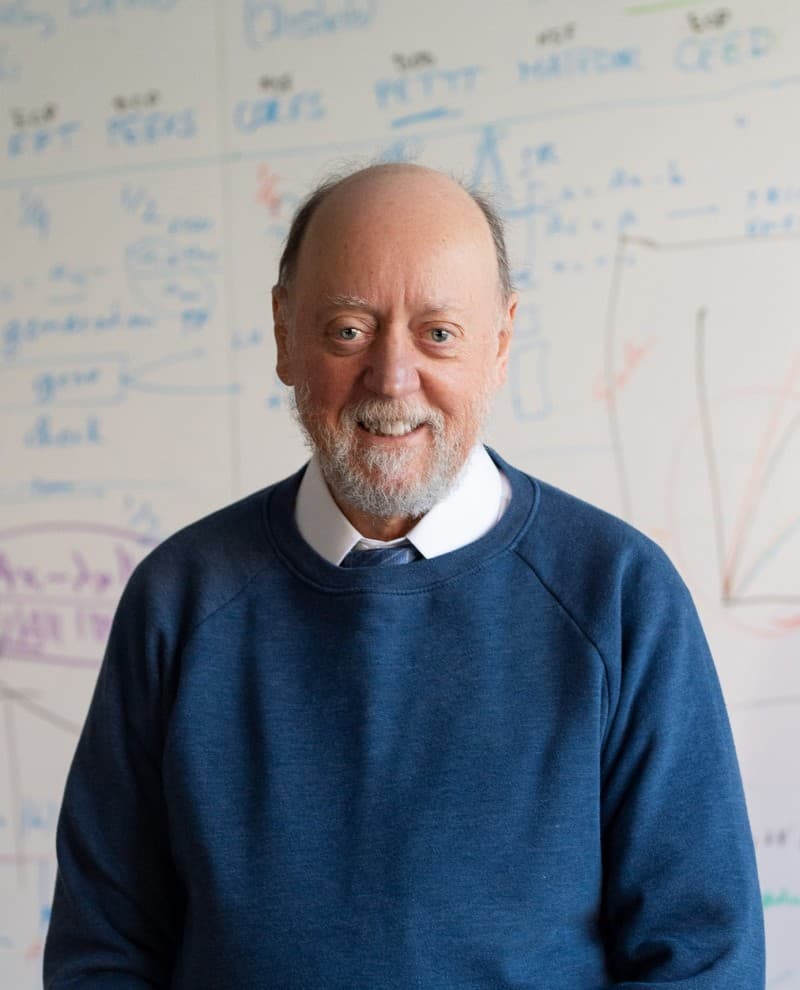
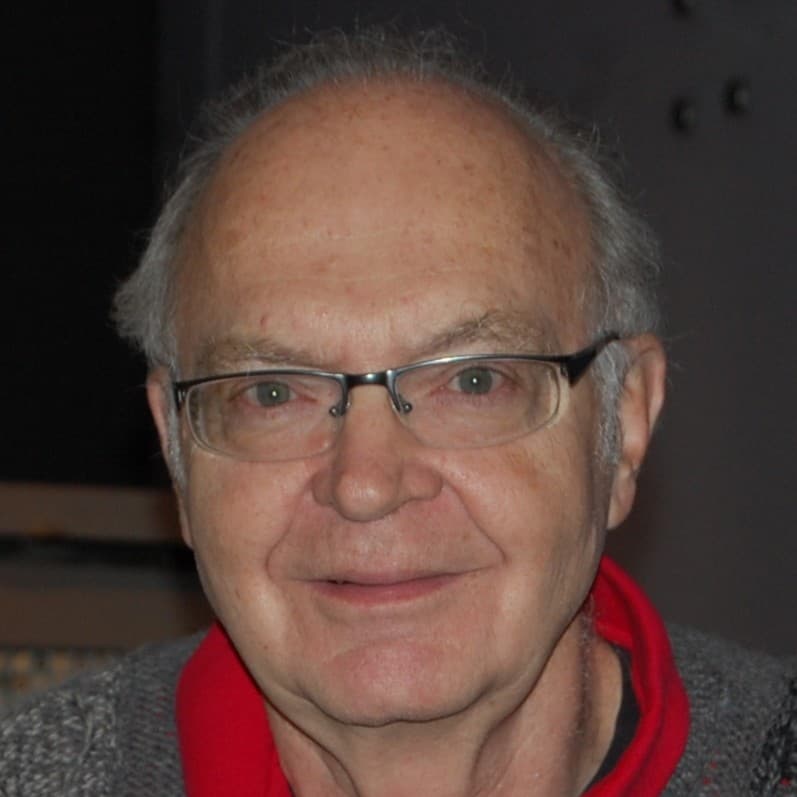
Dr. Donald E. Knuth, born January 10, 1938, is a renowned American computer scientist and mathematician, best known for his seminal work 'The Art of Computer Programming' and for developing the TeX typesetting system. Awarded the 1974 A.M. Turing Award, he is widely regarded as the 'father of algorithm analysis' and has profoundly influenced the field of computer science through his rigorous approach to programming and algorithms.
Question of the Day
“In an age where AI can generate code, what is the enduring value of deeply understanding the algorithms underneath?”
Insight: Knuth argues that understanding is the real product. AI-generated code without comprehension is like a calculator without mathematical intuition -- it gives answers but cannot tell you when the question is wrong. The value of deep algorithmic knowledge is in knowing what to build, not just how to build it.
Talk Highlights: Ask Me Anything: On Algorithms, Creativity, and a Life in Computer Science
In this wide-ranging AMA session, Donald Knuth fielded questions from over 150 attendees on topics spanning the future of CS, large language models, his development of TeX, and stories about fellow Turing Award winners. He discussed his current research on Hamiltonian cycles in directed graphs, shared his philosophy that learning to ask good questions matters more than answers, and offered colorful anecdotes about Richard Feynman, Edsger Dijkstra, Bill Gates, and Steve Jobs.
Key Takeaways
- Knuth believes the main value of building computational models comes from the process of creating them, not from running them -- citing a 1950s example where AC Nielsen solved their problems just by modeling their workflow, without ever needing the computer.
- He named Bob Tarjan's algorithm for strong components of a directed graph as the most elegant algorithm ever discovered -- the first time he's given a definitive answer to the 'favorite algorithm' question.
- His main concern with large language models is that they are fundamentally black boxes with no understanding, and that LLM-generated prose is often better than the writing it was trained on, making the fakery problem especially insidious.
- He described his creative process as a 'binary search' -- you try things, discover whether they match your particular abilities based on your life experiences, and iterate.
Notable Quotes
“I made sure that they didn't tell me any of the questions in advance because I think you learn more when I give a bad answer that's improvised than if I give a canned answer.”
“The main thing I think to learn is how to ask questions. And then if you get too good at that, then you have to figure out what questions not to answer.”
“My pessimism comes from people believing in fakery and my optimism comes from the enhancement of creativity when you have more tools to jog your mind and take all sides of the subject.”
Biography +
Donald E. Knuth
Early Life and Education
Donald Ervin Knuth was born on January 10, 1938, in Milwaukee, Wisconsin. He demonstrated exceptional mathematical ability from an early age, which would later shape his groundbreaking contributions to computer science.
Education
Case Institute of Technology (now Case Western Reserve University)
- Earned a Bachelor of Science in Mathematics in 1960
- His exceptional academic performance led the faculty to award him a simultaneous Master's degree
- This rare honor reflected his outstanding capabilities and dedication to mathematical studies
California Institute of Technology (Caltech)
- Obtained his Ph.D. in Mathematics in 1963
- His doctoral work laid the foundation for his later contributions to algorithm analysis and computer science
Academic Career
California Institute of Technology (1963-1968)
Knuth began his academic career at Caltech, where he served as an assistant professor and then associate professor. During this period, he began developing the ideas that would eventually become "The Art of Computer Programming."
Stanford University (1968-1992)
In 1968, Knuth joined Stanford University as a professor of computer science, where he would spend the majority of his career until his retirement in 1992. At Stanford, he established himself as one of the most influential figures in computer science.
Major Contributions
The Art of Computer Programming
Knuth's magnum opus, "The Art of Computer Programming," is a multi-volume series first published in 1968. This work is considered one of the most important and comprehensive texts in computer science, covering fundamental algorithms and data structures. The series has been instrumental in establishing computer science as a rigorous mathematical discipline.
TeX Typesetting System
Developed in the late 1970s, TeX is a sophisticated typesetting system that has become the standard for scientific and mathematical publishing. Knuth created TeX out of frustration with the quality of typesetting for his own books, and it has since revolutionized academic publishing.
Algorithm Analysis
Knuth is widely regarded as the "father of algorithm analysis" for his rigorous mathematical approach to studying the efficiency and behavior of algorithms. His work established the theoretical foundations for modern algorithm design and analysis.
Personal Life
Knuth married Nancy Jill Carter on June 24, 1961. Together, they have two children: John Martin Knuth and Jennifer Sierra Knuth. Despite his fame in academic circles, Knuth has maintained a relatively private personal life, focusing on his research and writing.
Legacy
Donald Knuth's contributions to computer science extend far beyond his published works. His meticulous approach to programming, his emphasis on mathematical rigor, and his dedication to excellence have influenced generations of computer scientists. His work continues to be fundamental to computer science education and research worldwide.
Career Timeline +
Career Timeline
- 1938: Born on January 10 in Milwaukee, Wisconsin
- 1960: Graduated from Case Institute of Technology with Bachelor's and Master's degrees in Mathematics
- 1963: Obtained Ph.D. in Mathematics from California Institute of Technology
- 1963-1968: Assistant and Associate Professor at California Institute of Technology
- 1968: Joined Stanford University as Professor of Computer Science
- 1968: Published first volume of "The Art of Computer Programming"
- 1974: Awarded the ACM Turing Award for major contributions to algorithms and programming languages
- Late 1970s: Developed the TeX typesetting system
- 1979: Awarded the National Medal of Science
- 1992: Retired from Stanford University
- 1996: Received the Kyoto Prize for lifetime achievements in advanced technology
Awards and Honors
- ACM Turing Award (1974): Recognized for his major contributions to the analysis of algorithms and the design of programming languages
- National Medal of Science (1979): Awarded for his impact on computer science and mathematics
- Kyoto Prize (1996): Honored for his lifetime achievements in advanced technology
- Fellow of the American Academy of Arts and Sciences
- Foreign Member of the Royal Society
- Honorary degrees from numerous universities worldwide
Content produced by Turing Minds. Usage guidelines.